Atmosphere Thermodynamics
Gas Reduction vs. Electric Kilns
The kiln atmosphere dictates the oxidation state of ceramic colorants and clay body iron. While electric kilns provide clean, predictable radiant oxidation, gas-fired kilns manipulate oxygen starvation to strip oxygen from iron and copper, altering their molecular structure and aesthetic appearance.
Direct Contrast
Atmospheric & Operational Comparison
METRIC-08
Atmosphere A
Electric Kilns (Clean Radiant Oxidation)
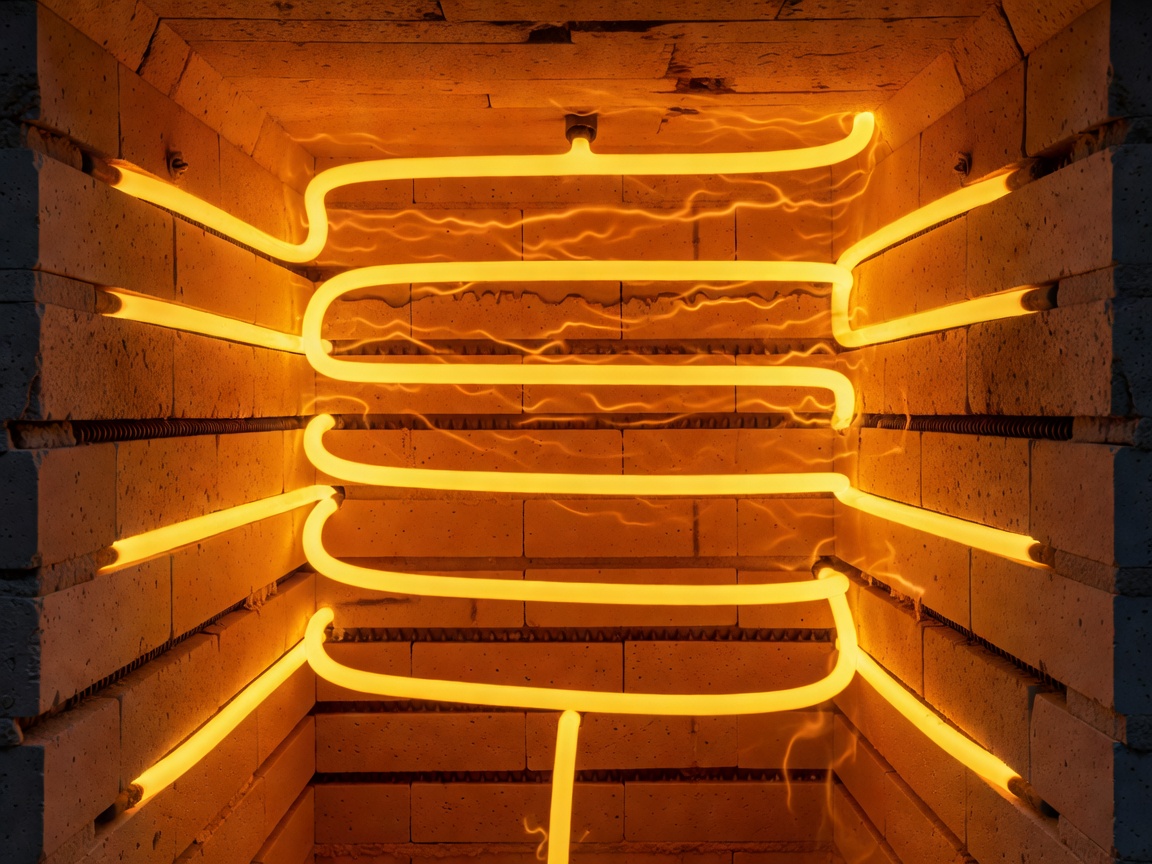
Heated via coiled iron-chromium-aluminum (Kanthal A-1) resistance wire elements. The atmosphere remains consistently rich in ambient oxygen (20.9% O₂).
- Iron Oxide: Remains red ferric oxide (Fe₂O₃), producing warm browns, honey yellows, and creams.
- Copper Oxide: Yields vibrant turquoise and leaf-green cupric states (CuO).
- Microprocessor Control: Digital ramp-and-soak PID programming with ±2°C precision.
- Limitations: Elements degrade rapidly if exposed to reduction gases; maximum realistic temperature is Cone 8–10 (1280°C).
Atmosphere B
Fuel-Fired Kilns (Active Reduction)
Powered by natural gas, propane, or wood. Dampering the chimney flue chokes combustion air, forcing burner fuel to seek oxygen directly from metal oxides in the clay and glazes.
- Iron Oxide: Stripped to ferrous oxide (FeO), which acts as a powerful flux, melting into classic jade celadons and toasted clay bodies.
- Copper Oxide: Reduced to cuprous oxide (Cu₂O) or colloidal copper, yielding oxblood and sang-de-boeuf reds.
- Oxygen Probe Reading: 0.65 to 0.75 lambda sensor value during reduction interval (950°C to peak).
- Carbon Trapping: Unburned hydrocarbon soot dissolves into flashing slips and Shino glazes.
Cooling Protocol
Controlled Cooling & Cristobalite Inversion
CYCLE-SAFETY
1280
PEAK
Vitrification Soak & Fast Crash Cool
1280°C down to 1050°C // Rapid Descent
Fast drop prevents the uninhibited growth of dull crystalline silica blooms, preserving high-gloss transparency and surface clarity on celadon glazes.
1050°C
573
INVERT
Alpha-Beta Quartz Cooling Inversion
600°C to 500°C // Extremely Slow Rate (<40°C/hr)
Quartz contracts suddenly by 0.45%. Rapid passage through 573°C generates massive tensile shear forces, producing the sharp cracking known as "dunting".
573°C
220
CRIST
Cristobalite Shock Interval
250°C to 180°C // Keep Kiln Sealed
Cristobalite (silica converted during prolonged high-temperature soak) undergoes dramatic 3% volume contraction. Opening kiln doors early destroys pieces instantly.
220°C